Why depict the DEVIL?
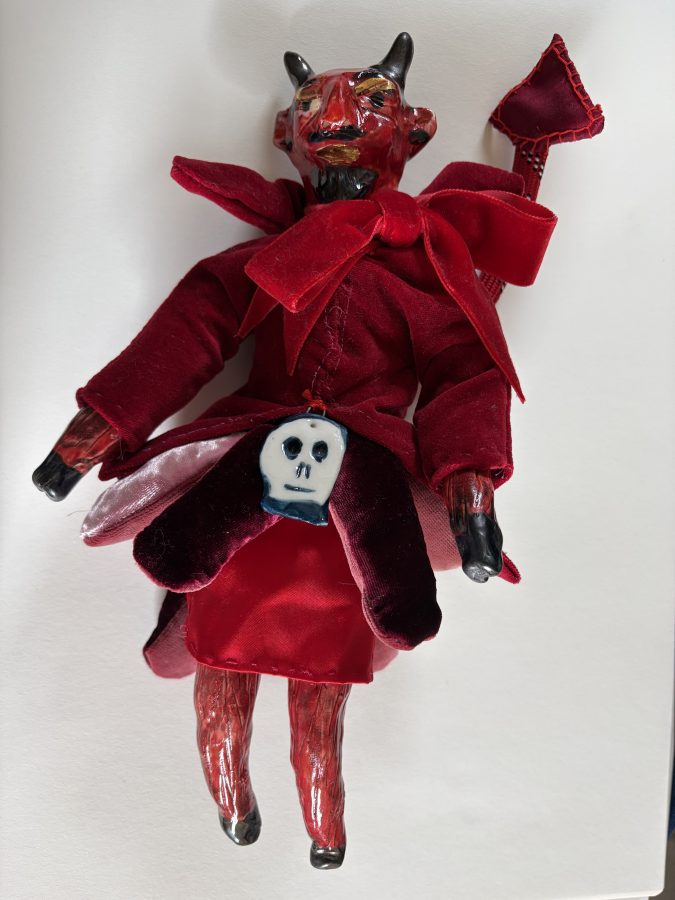
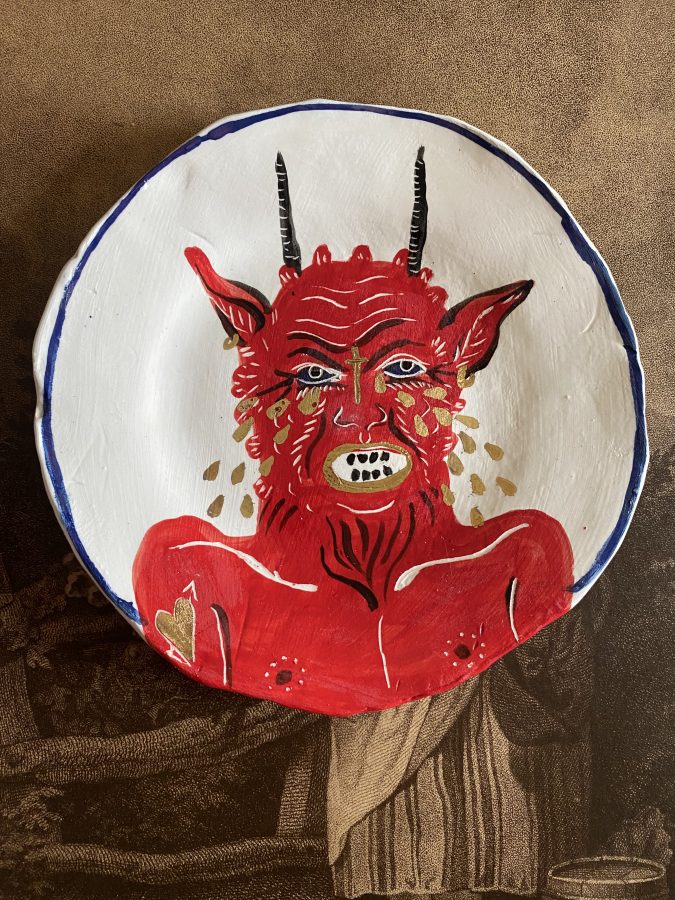
The devil has appeared repeatedly in my recent work; in ceramic figures, painted plates and small theatrical scenes. Not as a religious certainty, but as a symbolic language through which to explore the shadow — the parts of ourselves that are difficult to acknowledge, contain or love.
Much of my practice is concerned with bringing unconscious material into visible form. I am influenced by Jungian ideas around the shadow: the rejected, hidden or split-off aspects of the psyche that continue to shape us whether we recognise them or not. For me, making is a way of entering into dialogue with these energies rather than denying them. I do not approach the devil as something purely evil, but as an image carrying contradiction: seduction, shame, humour, fear, vitality, desire, transgression and vulnerability.
The process of making these works felt strangely playful and unsettling at the same time. The devil figures emerged almost like folk characters or puppets from an unknown theatre. I worked intuitively, allowing forms to evolve through instinct rather than fixed plans. The plates were painted quickly and directly, often using limited colour palettes of red, black, white and gold. I wanted them to feel raw, immediate and emotionally exposed — somewhere between icon, carnival mask and confession.
The ceramic devil sculpture, which will be shown in Speak of the Devil at Gallery X in Dublin, developed alongside a series of devil plates and small companion figures. Dressing the sculpture in fabric introduced another layer of meaning for me. Clothing creates persona; it humanises the symbolic figure and allows tenderness, absurdity and melancholy to coexist with menace. The figure becomes less a monster than a carrier of difficult human truths.
I am interested in how societies externalise darkness — how we project fear, desire and blame onto invented figures. The devil becomes a container for impulses we struggle to integrate within ourselves. Yet when brought into art, these images can shift. Humour enters. Compassion enters. The grotesque becomes strangely intimate.
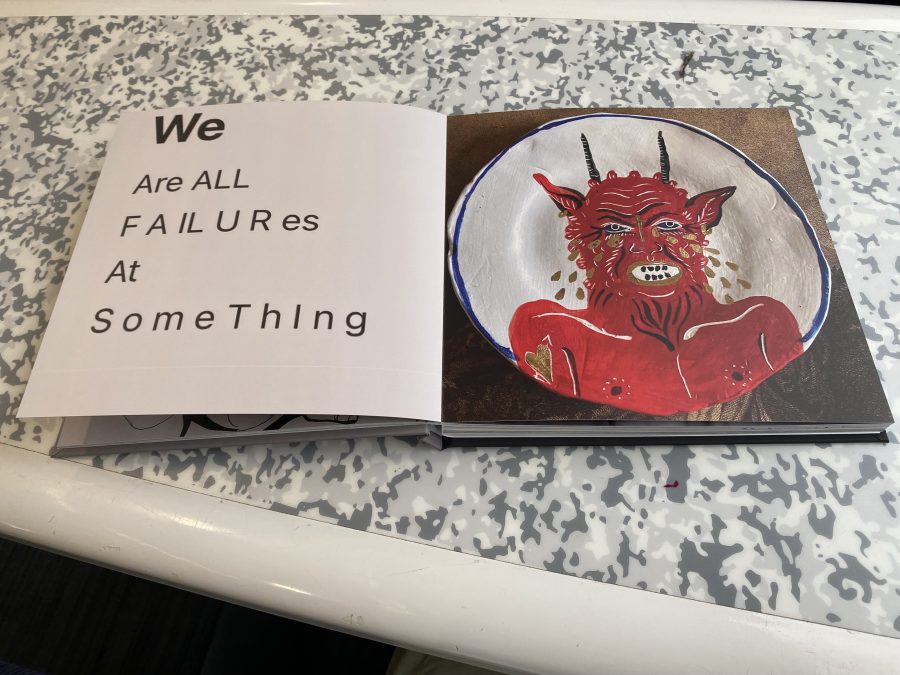
There is also something important to me about making these works by hand in clay. Clay records touch, pressure, hesitation and accident. The plates crackle and distort. Faces become asymmetrical. Glazes behave unpredictably. I want the work to retain evidence of vulnerability and imperfection rather than polished certainty. One text piece accompanying the work reads: We Are ALL FAILURES At SomeThIng. The statement is intentionally awkward and uneven. It speaks to the impossibility of maintaining complete control or purity. To enter the shadow is also to confront limitation, contradiction and failure.
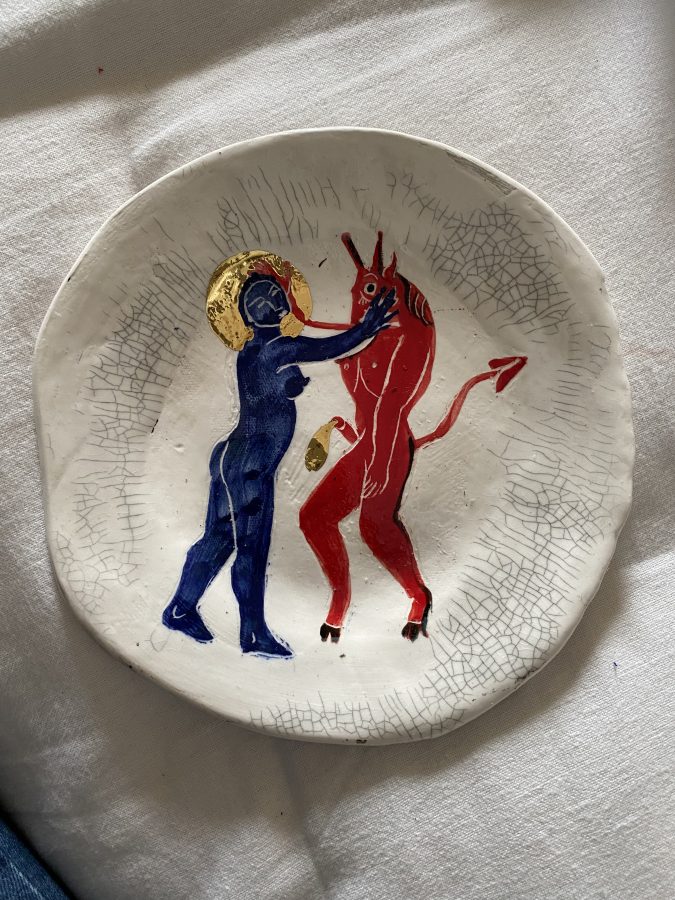
In some of the works the devil is paired with human figures, lovers, animals or flowers. These juxtapositions matter to me. They suggest that darkness does not exist separately from tenderness, beauty or longing, but alongside them. The shadow is not only destructive; it can also hold instinct, creativity, erotic energy and buried vitality.
By visualising the devil, I am not celebrating cruelty or despair. I am trying to look directly at what is difficult, hidden or culturally taboo, and to transform fear into image, relationship and dialogue. Art becomes a place where the forbidden can be held, examined and reimagined rather than simply denied.
These works are part of an ongoing attempt to make visible the inner theatre of the psyche — a theatre populated by archetypes, fragments, masks, witnesses and ghosts — and to allow even the darkest figures a place at the table.