Everything and everyone we know is there
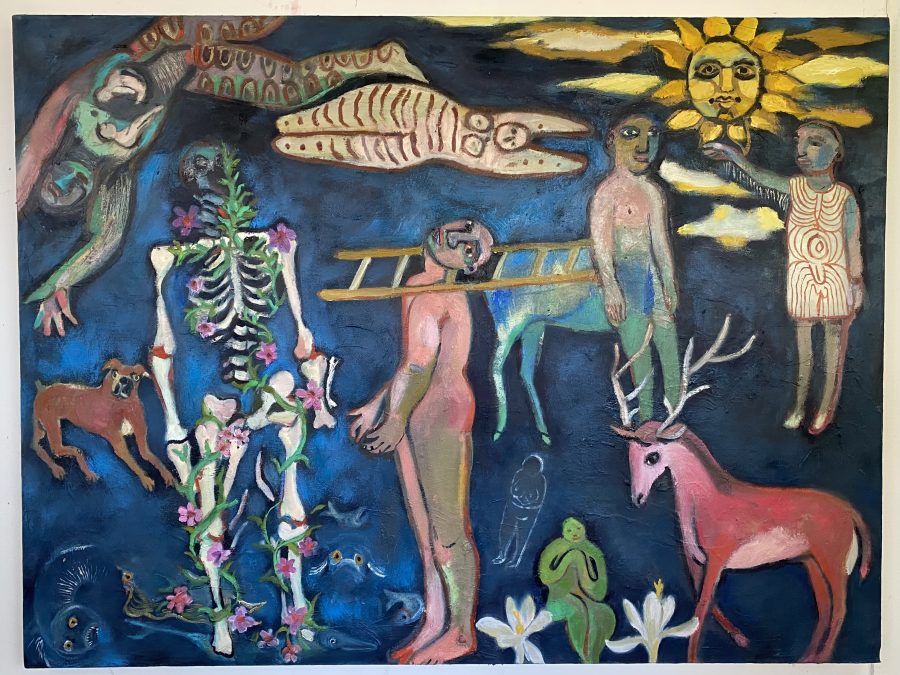
Over the past year my paintings have become increasingly shaped by trust in the unconscious. Rather than beginning with a fixed narrative or resolved composition, I start with fragments — a figure, an animal, a gesture, a symbol, a colour relationship — and allow the work to unfold through association, intuition and response. The paintings emerge slowly, often surprising me, as if they already exist somewhere beneath language and conscious intention.
Jungian thought has been an important influence in this process, particularly the idea that the psyche speaks through symbol, dream, projection and image. I am interested in how painting can function as a form of active imagination: a meeting place between conscious awareness and the deeper, less rational layers of the self. The figures that appear are not illustrations of theories, nor are they fixed identities. They feel more like psychic presences — parts of the self, fragments of memory, instinctive energies, ancestral echoes or emotional states asking to be recognised.
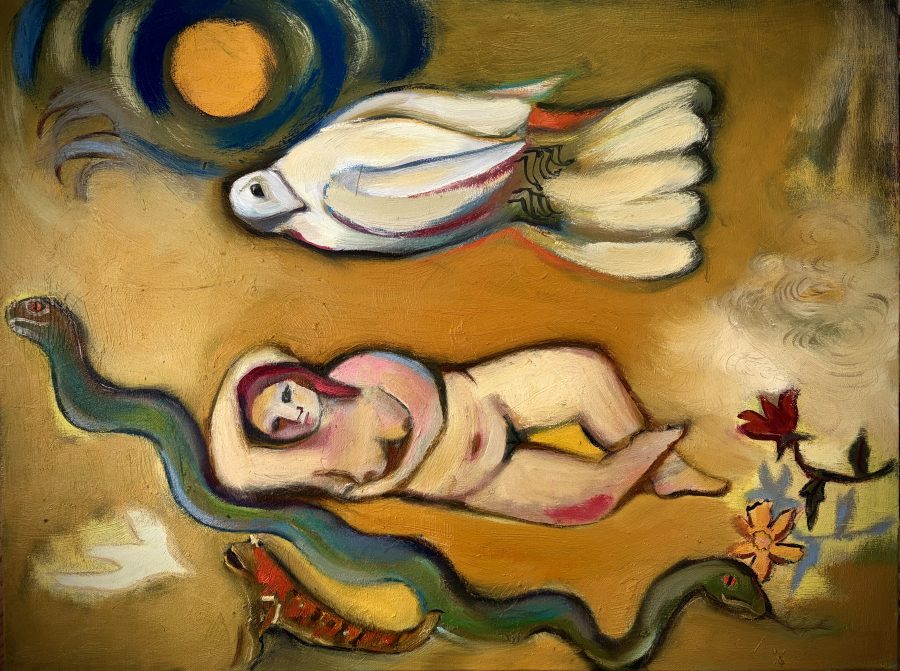
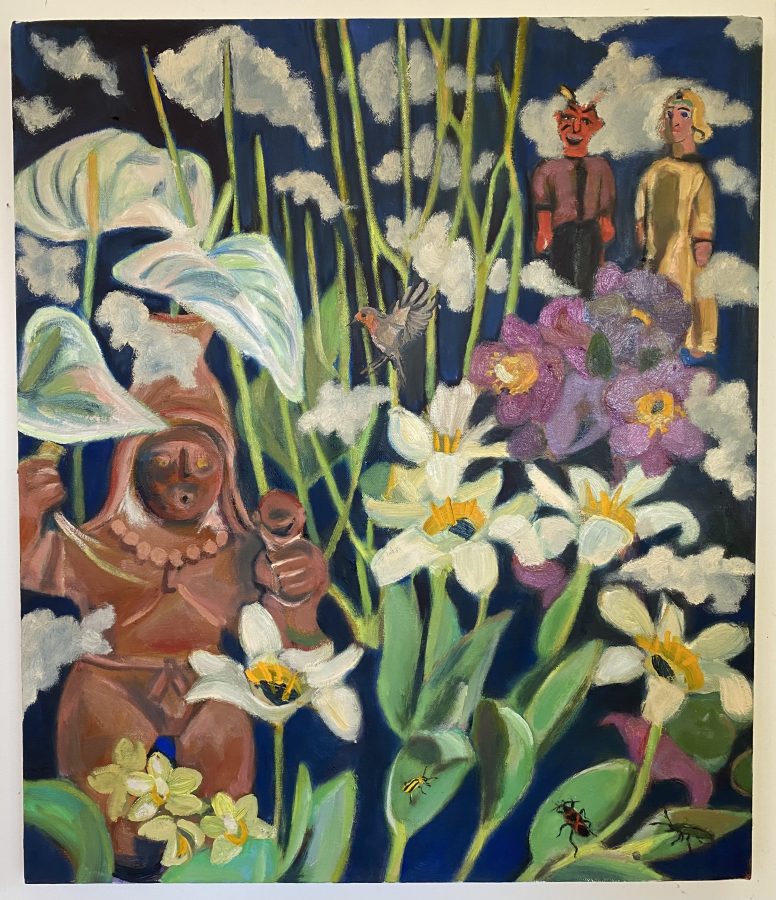
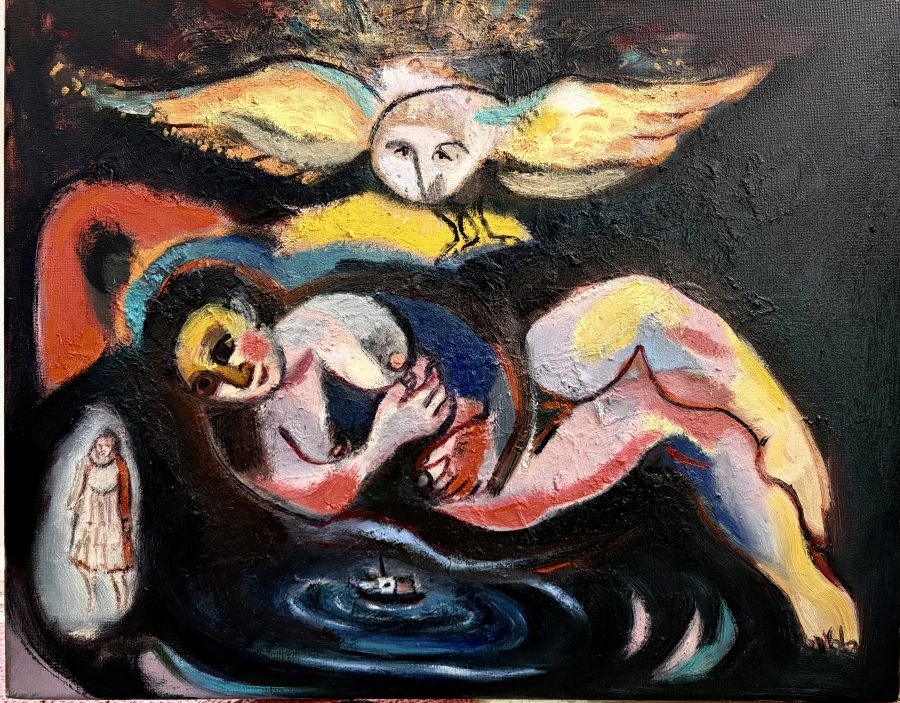
Animals recur frequently in the work: wolves, birds, deer, snakes, dogs, hybrid creatures. They act as carriers of instinct and transformation, moving between tenderness and danger, vulnerability and protection. Human figures often appear alongside skeletal forms, flowers, suns, masks or ritualistic motifs. Life and death coexist naturally in these paintings. I am less interested in literal meaning than in creating an emotional and symbolic atmosphere that feels psychologically true.
The paintings are rooted in a desire to give the unconscious a believable presence — something I can sit with rather than explain away. Painting becomes a way of allowing what is hidden, fragmented or disowned to enter into relationship with the visible world. In Jungian terms, many of these images relate to shadow material: aspects of the self that are vulnerable, unruly, instinctual, grieving or excluded. But there is also humour, absurdity and play. The works are not solely dark; they are attempts at integration.
I think of these paintings as spaces where different parts of the psyche can coexist without needing immediate resolution. Through the act of making, figures that initially feel strange or unfamiliar gradually become companions. There is a sense of recognition in this process — of disparate parts “coming home” to one another.
My interest in folk art, fairytale, mythology and children’s imagery also informs the work. I am drawn to visual languages that carry emotional truth symbolically rather than literally. The directness of these traditions allows difficult psychological material to remain open, poetic and alive.
Ultimately these paintings are less about certainty than about relationship: learning to remain present with ambiguity, contradiction and emotional depth. They are acts of listening as much as acts of creation.