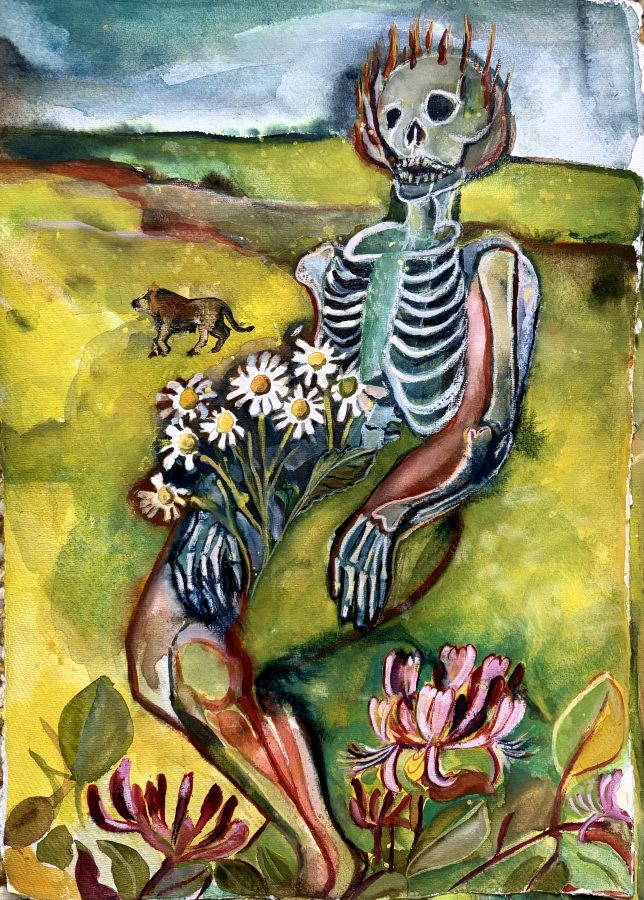
The trip to Yorkshire
A3
Watercolour gouache
Trusting the Unconscious
My practice begins with trust in the unconscious as a source of imagery. I rarely begin knowing what an image is going to say. Instead, making becomes a way of allowing psychic material to surface: memories, bodily sensations, fears, desires, losses and archetypal forms that may not yet be available to ordinary language.
I try not to interrogate what appears too quickly. I give it somewhere to exist.
In this sense, the work is an act of witnessing rather than explanation. Something in the psyche asks to be seen, and through making it acquires a body. A skull sits beside a living woman. Bones grow through flesh. Flowers emerge from bodies. Animals arrive as companions, messengers or witnesses. Death and fertility repeatedly inhabit the same image. The beautiful and the disturbing coexist because psychic experience rarely arrives in neat categories.
The body is central to this process. My figures are porous rather than anatomically sealed. Their interiors become visible and may contain stones, bones, plants, spirals, animals or other bodies. What has been held internally can migrate outwards. What has been difficult or impossible to articulate can acquire colour, contour and substance. The body becomes a container for an inner ecology.
I resist translating these images too quickly into fixed symbols. A deer does not have to mean one thing; neither does a skull, snake, flower, bird or bone. Their meanings are allowed to remain unstable, carrying personal memory alongside older cultural and archetypal associations. By preserving that ambiguity, I allow the image to know something that I may not yet consciously know.
This requires a particular kind of surrender. I have to tolerate uncertainty long enough for relationships to emerge between apparently unrelated forms. The conscious artist is still present—making decisions about colour, line, composition and material—but she is not entirely in command of the content. The work develops through a dialogue between intention and emergence.
Seen together, the works begin to resemble inhabitants of the same psychic territory. Certain forms return altered: the blue woman, the skeleton, the animal, the flowering or wounded body, the vessel, the spiral, the luminous point in darkness. I have not deliberately constructed a symbolic system. The recurrence itself becomes significant: something is asking for sustained attention.
Perhaps this is what witnessing means within my practice. It does not necessarily mean curing, resolving or even understanding what emerges. It is simply saying:
I see that you are here. You may take form.
Once given form, what was previously private and internal becomes materially present in the world. I can encounter it outside myself. It can surprise me, contradict the story I consciously tell about myself, or remain mysterious.
I am not searching for symbols. I am trying to create the conditions in which they are permitted to arrive.
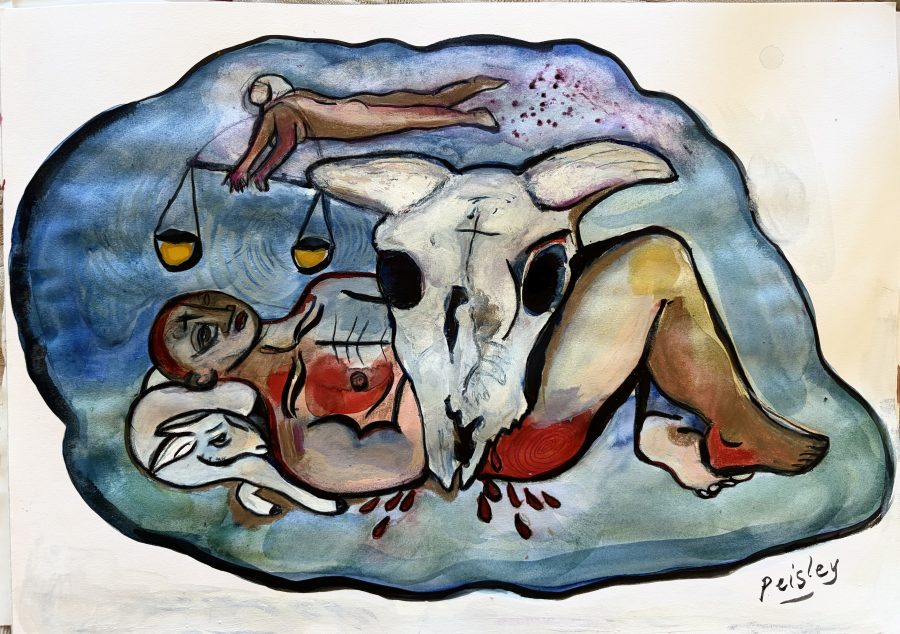
The trip to Yorkshire
A3
Watercolour gouache
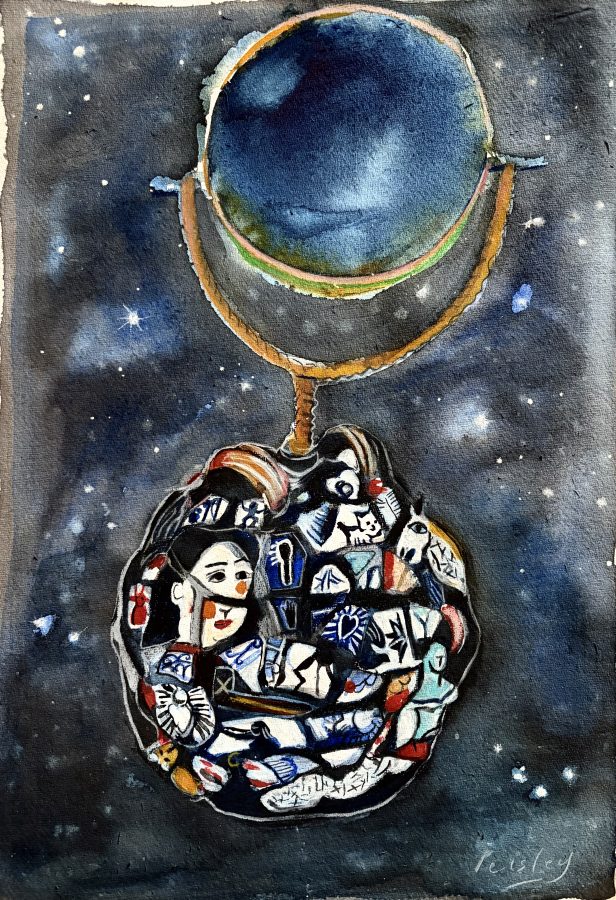
The Restless Soul
A3
Watercolour gouache ink
Skull
A3
Watercolour gouache ink
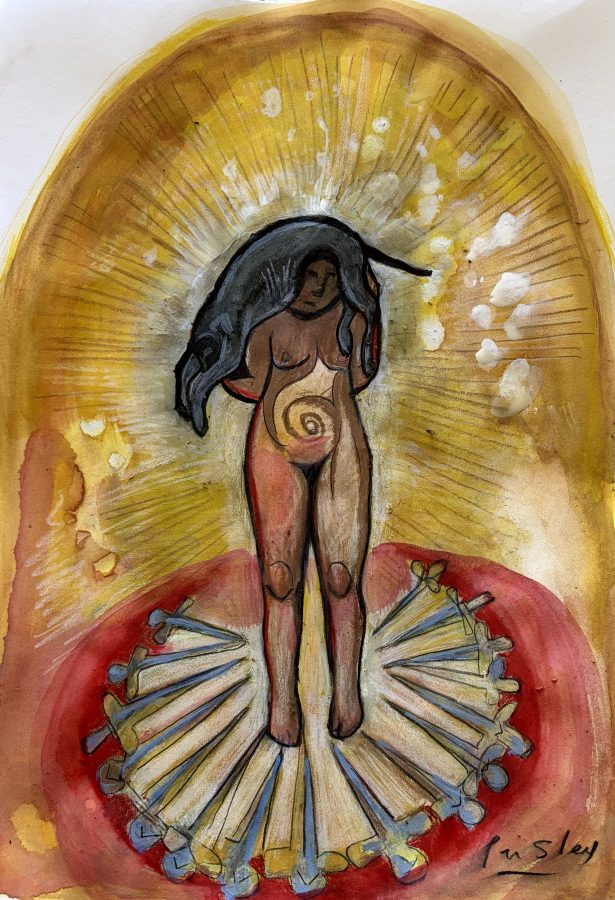
Passing over
A3
Watercolour gouache ink
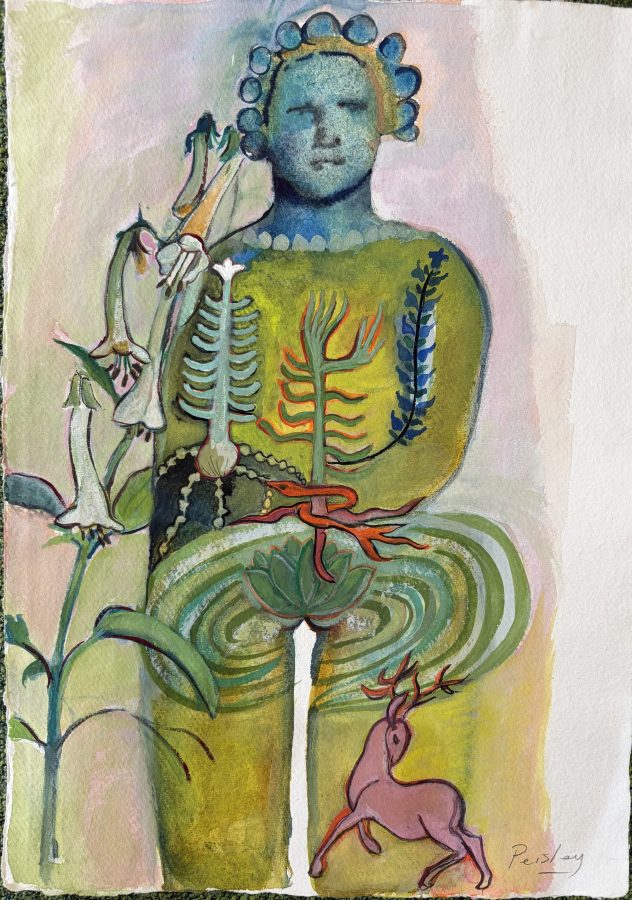
The woman who plants seeds
A3
Watercolour Goyache ink
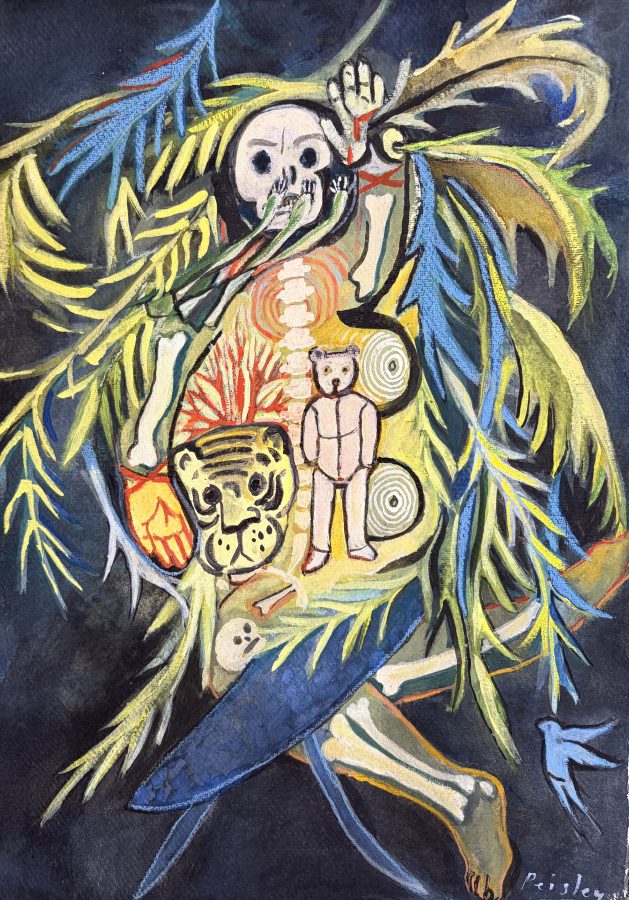
The blue bird the black night
A3
Watercolour gouache ink
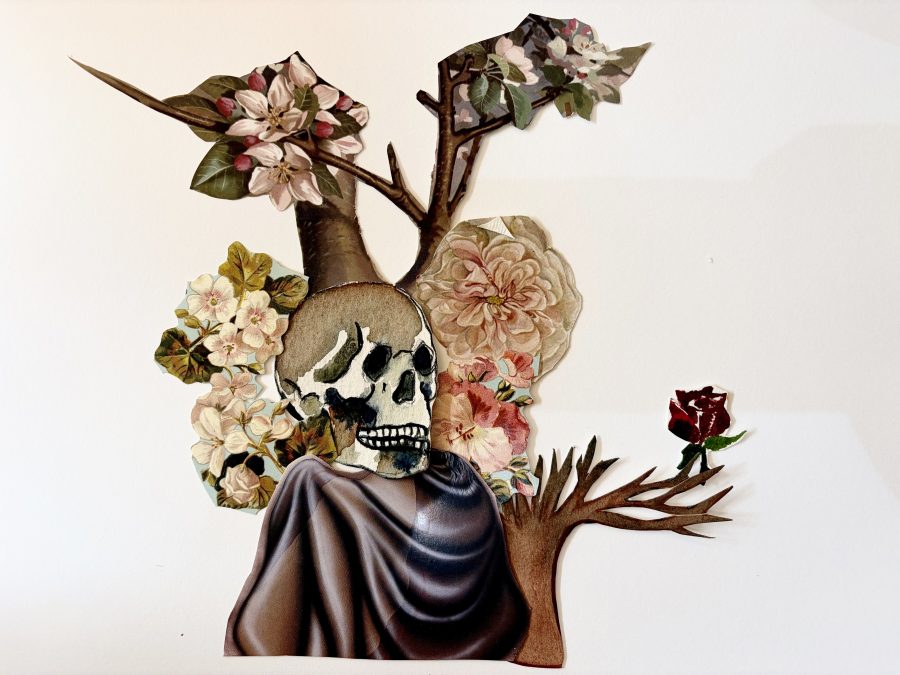
Dissection
A3
Collage
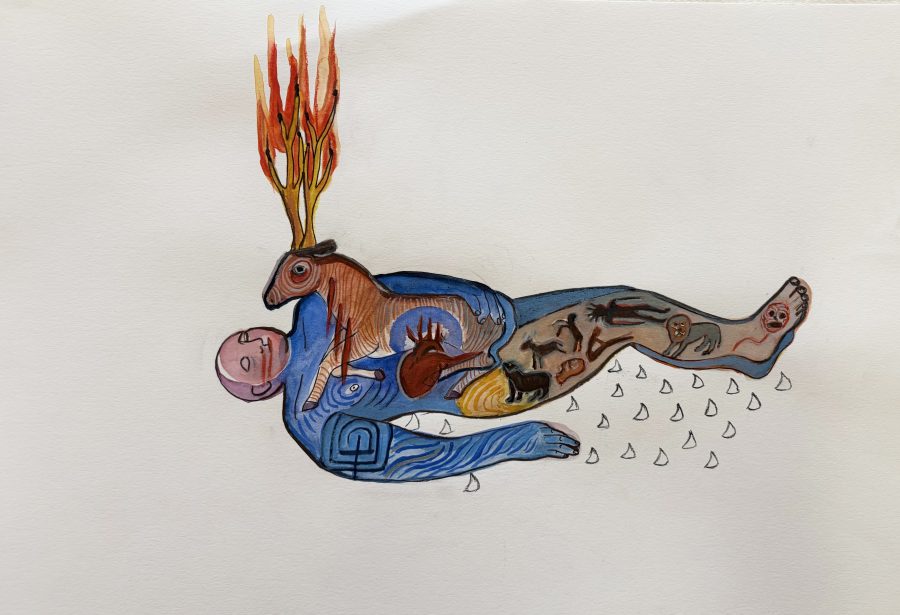
Resting on him
A3
Watercolour coloured pencil
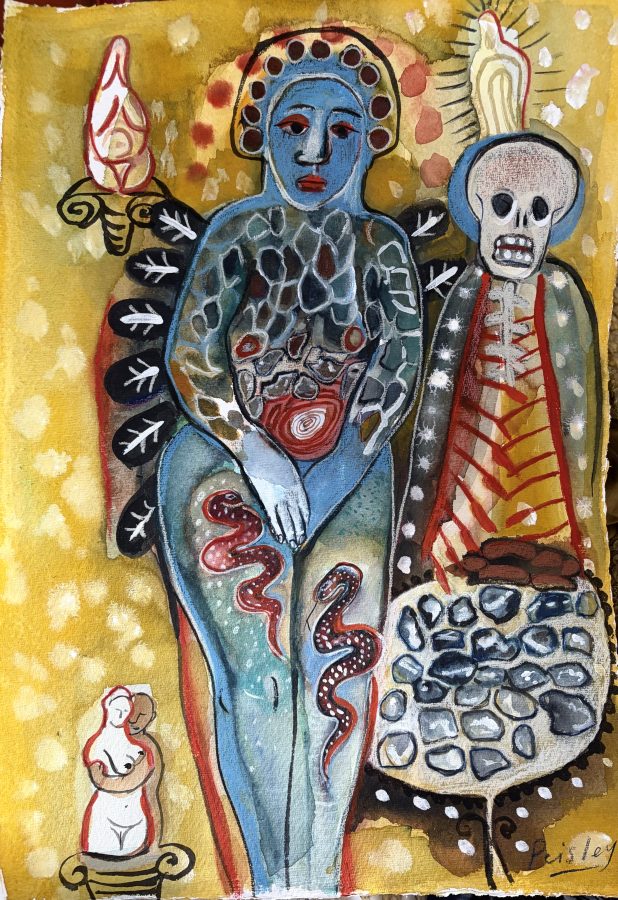
The we moan who carries rocks
A3
Watercolour, coloured pencil
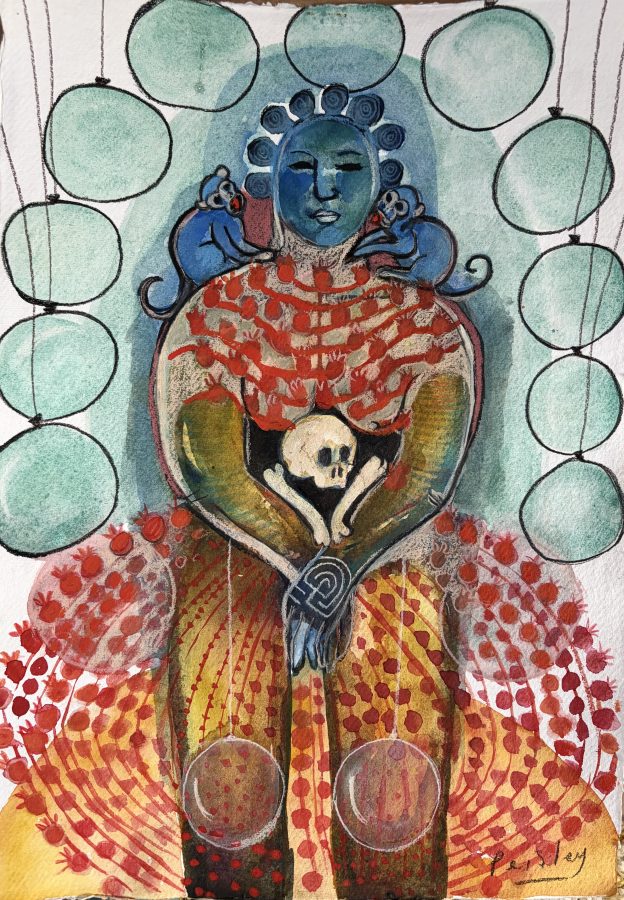
The woman who holds truths
A3
Watercolour coloured pencil
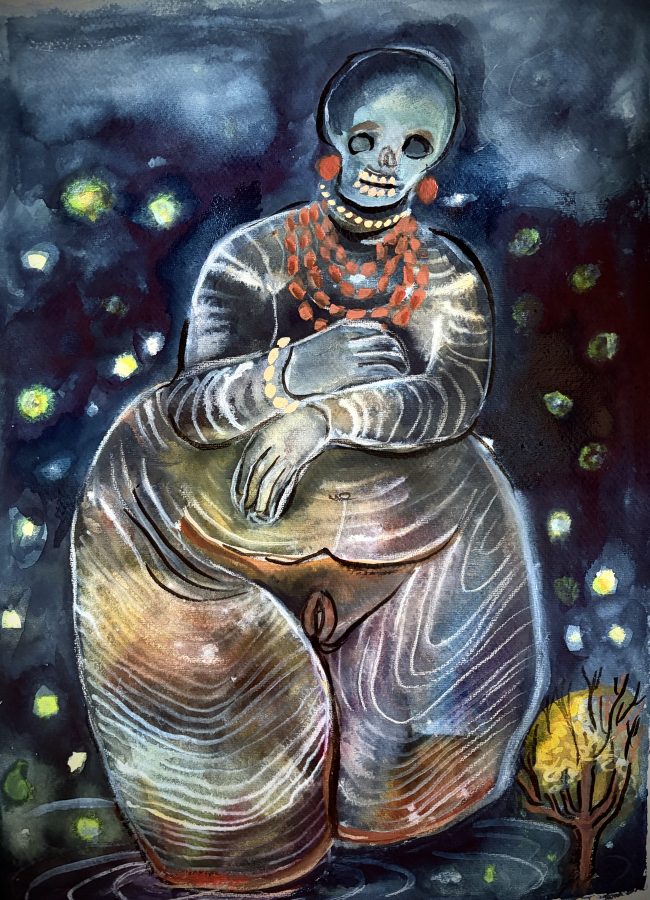
The woman who holds the Earth
A3
Watercolour and gouache
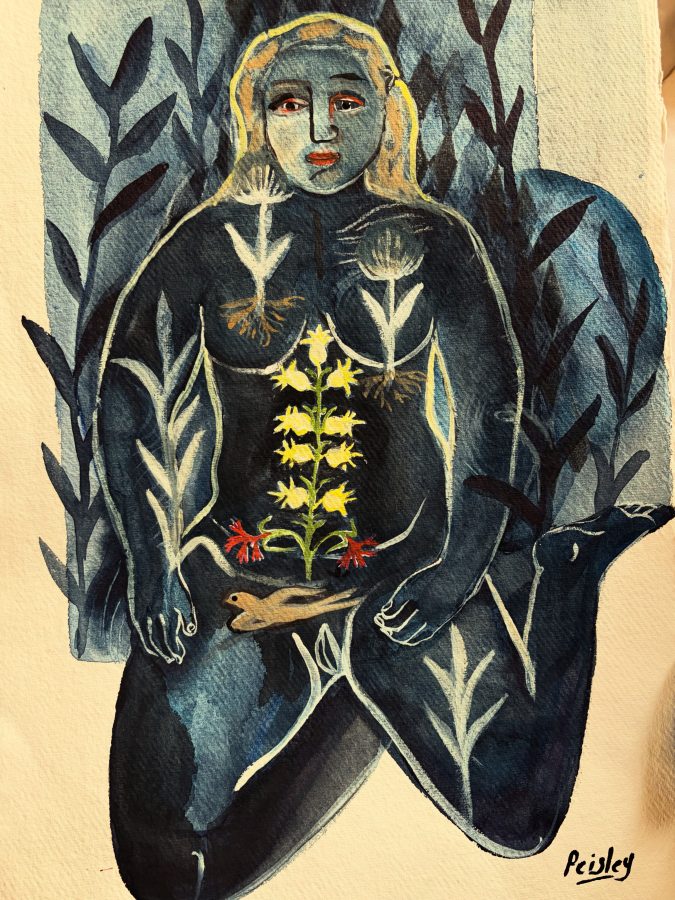
New growth in the dark
A3
Watercolour gouache
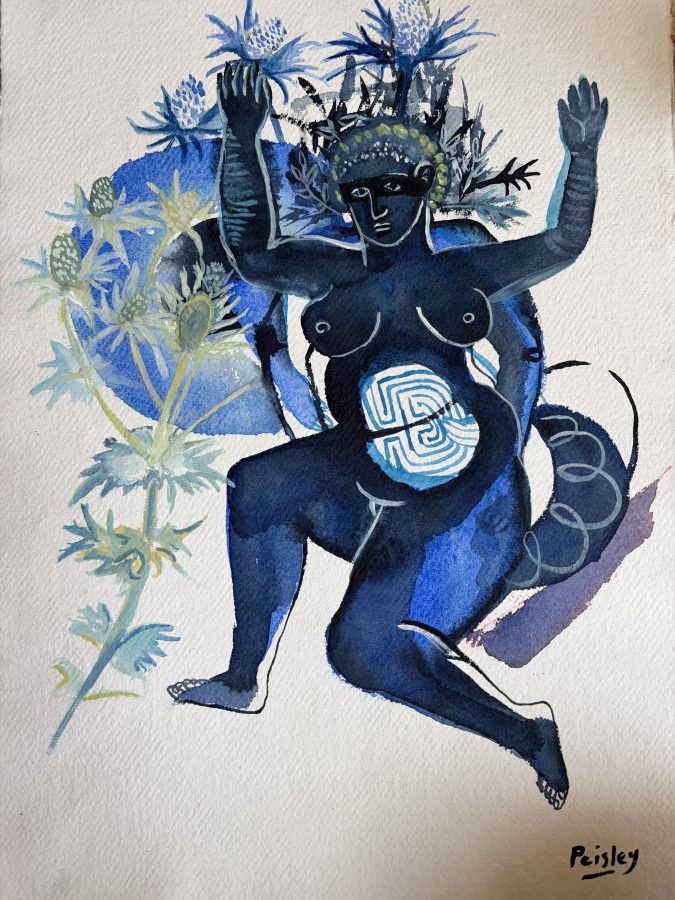
New dance
A3
Watercolour gouache